
Four Money Moments with YeskeBuie Parents
Many of our adult perspectives on money were formed in early childhood. Think about it: When was your first money memory? Was it saving your allowance to buy a toy you really wanted? Or opening your first bank account with a loved one? Maybe it was the pride of receiving your first paycheck, because, from that moment on, you knew what it meant to earn, spend, and save. Everyone’s journey with money looks a bit different, but the goal — feeling confident in future financial decisions — remains the same, and those formative experiences can impact how you manage your money for the rest of your life.
At YeskeBuie, we believe teaching kids about money early helps build solid habits that better prepare them for the years to come. It’s not just about saving money but understanding the value behind making wise and responsible choices. Our team members with young children help their kids learn through play, and, in turn, have learned a thing or two themselves.
See what insight and advice YeskeBuie parents have to offer:
How and where do I start when it comes to talking about financial literacy at home? Where can I find resources?

Kacie Fawls
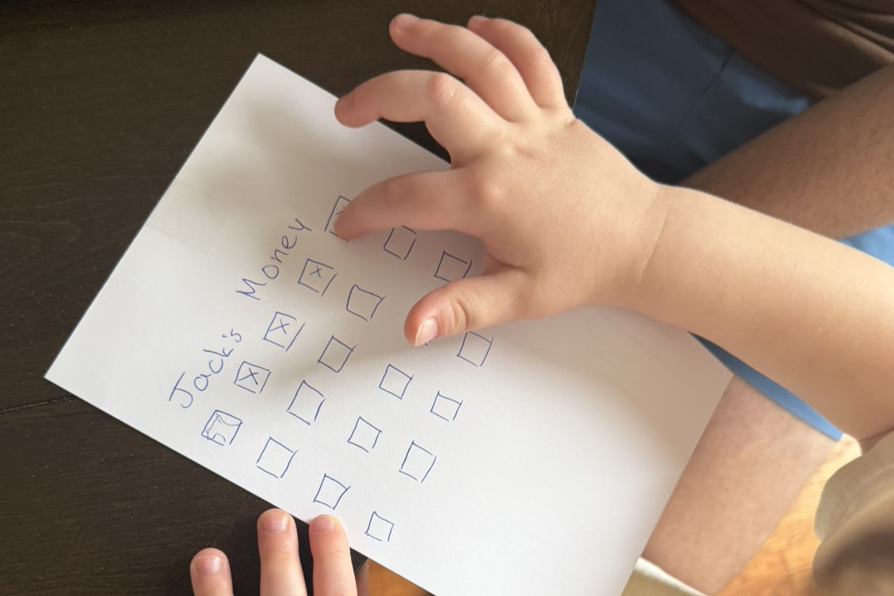
“We’ve been reading the Three Money Bears and Milton the Money Savvy Pup since Jack was a baby. More recently, though, we’ve been working on getting him to clean up his toys in exchange for $1.00. Each time he does it to buy books at his school’s book fair!”
By introducing simple money lessons as children grow, we can support them as in building their toolkits to make informed financial decisions down the line. Allowances, budgeting, and goal setting are just a few of the everyday moments that offer powerful opportunities to help kids develop confidence and establish healthy relationships with money, but they might be a bit complex for younger children to understand. We love starting simple with ideas like saving, spending, and sharing to impart the wisdom that money has value and requires thoughtful consideration.

Lauren Mireles
“We recently checked out Pete the Cat Saves Up from our local library and it’s been a nightly staple in Aria’s bedtime routine for a few weeks. The book teaches concepts like saving and patience, while still feeling relatable with the beloved character, Pete. Aria, like Pete, has her own piggy bank and likes to take out her coins and bills from time to time and count them.
We also have a toy cash register that is a go-to play item for both Aria and Cameron. While Cam mostly tries to eat the coins, he likes to watch his big sister make and sell her pretend pizzas.“
An understanding of money is crucial for long-term success, and the earlier we start working with our children to learn money concepts, the better. There is a wealth of resources available to you if you know where to look. Your local public library should have financial literacy books for all ages, and if they don’t have the one you’re looking for, you can usually request titles be added to their purchasing list at no cost to you! Some of Lauren M.’s favorite money books for young children include:
Libraries, and sometimes local universities, also often host themed Storytime, day-long workshops, or longer summer camp classes to help children and teenagers train their money muscles while having fun and making new friends.
You can also ask your financial planner for recommendations. We’re passionate about our Financial Literacy Program at YeskeBuie. which we designed to include series of tools, books, and resources that meet kids where they’re at and help educate and facilitate comfortable conversations about money and finance. (Stay tuned for a refresh coming soon, and if you have any other resources that you’ve enjoyed with your kids, we’d love to hear about them!)
How can everyday moments become money lessons?

Yusuf Abugideiri
“Both of our kids have Money Savvy Pigs, and they both use them. The other day, we took Noah to Dick’s Sporting Goods to get baseball gear, and he wanted to buy himself some new clothes. We explained to him that to do so, he would need to use his own money. He did! We went home, opened his piggy bank, and found out he had plenty of cash to cover the new outfit, with room to spare. We organized his money together, and then he decided how to re-allocate each slot.
Rian watched the whole saga, and then asked me, ‘Dad, can you do a money and piggy bank lesson with me, too?’ Hopefully through these experiences they are learning!”
As children grow, the lessons grow with them. Learning budgeting — how to purposefully and dependably decide how money should be spent — can help alleviate future potential financial stress when future decisions may feel more serious. Implementing goals for how children and young adults may want to spend their money gives them a clear view early on of how money can be used to build the life they desire, which feels motivating, meaningful, and rewarding. Achieving goals over time also helps kids build discipline and develop skills like self-control when it comes to decision making. These “small wins” can help build momentum and make setting larger financial goals feel attainable in the future.
My children love their play money now, but how can I keep the conversations going as they get older?

Lauren Stansell
“We have a Target cash register that the kids love to play with! We play the shopping game often – the kids will find things around the house they’d like to buy, and I ring them up on the cash register. (Fun fact: when I was a kid my dream job was to be the “check out lady” so playing this game is nostalgic for me!)
We also talk a lot about “dollar bucks” thanks to Bluey. We talk about working for dollar bucks and that dollar bucks help us buy the things we need (like food and a home) and the things we want (like new toys or experiences together).
I’m looking forward to continuing the lessons over time with the YeskeBuie financial literacy toys, and I hope to spend time in Nora’s and Owen’s preschool classes sometime soon reading books and sharing lessons!”
Play is an excellent way to introduce financial concepts to preschoolers. As children reach elementary school and middle school age, gamifying more specific goals like saving part of an allowance in a piggy bank or comparing prices at the store can help keep them engaged. Introducing concepts like bank accounts, interest, and credit cards in your child’s teenage years helps further their understanding of more complex financial planning topics as they get older. They learn about how money can grow for them and why planning ahead can be so beneficial. Even teaching common financial terms, such as the different types of accounts that are available and how the savings benefits of each differ, can be impactful.
Our goal is to serve as helpful thought partners to you and your family through every stage of life. If you would like to receive any of our financial literacy materials or ask us any questions on how to best approach the topic, please don’t hesitate to reach out to our financial planning team. We look forward to hearing from you!
Are you interested in exploring financial literacy further?
Many of us weren’t taught financial literacy skills in school, so learning at home becomes a crucial tool for success down the line. Because we’re passionate about financial literacy at YeskeBuie (and we hope you are, too!), we have a few more articles on the topics discussed above that we think you’ll enjoy: